
Professional chimney repair specialists with offices in Cambridge and St Neots. Repointing, lead flashing, flaunching, pot replacement, stack rebuilds and removal. Experience with listed buildings and Conservation Area properties. Free on-site inspection, all work guaranteed.
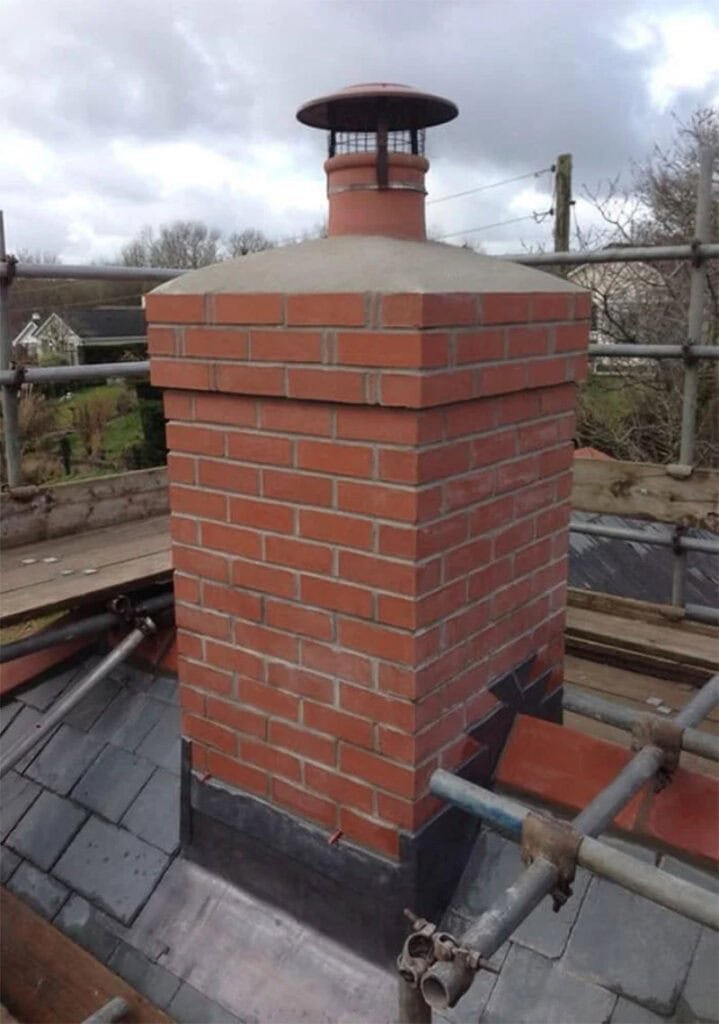
Chimneys are the most weathered part of any roof. Exposed on all four sides above the roofline, they take the full impact of driving rain, wind, frost and the sustained temperature cycling that accelerates mortar erosion. On Cambridge’s large stock of Victorian, Edwardian and inter-war properties — many of them with two, three or four chimney stacks — chimney deterioration is one of the most common causes of roof-related damp, water ingress and structural problems that we encounter across Cambridgeshire. We carry out chimney repair work at all stages of deterioration, from early-stage repointing to complete stack rebuilds and removals.
Our chimney repair service covers repointing, lead flashing repair and replacement, flaunching repair and renewal, chimney pot and cowl replacement, stack rebuild and partial rebuilds, chimney stack removal and roof making-good, chimney waterproofing and stormguard treatment, and chimney liner and flue system repair. We work on all property types — from modern houses and bungalows to Victorian terraces, Listed Buildings and properties within Cambridgeshire’s many Conservation Areas, where material specification must be appropriate to the original building fabric and planning requirements.
Every chimney inspection we carry out is free and includes photographs of all visible areas of the stack. If there is damage we cannot see from the roof level that requires further investigation — for example a suspected liner failure or internal flue damage — we will tell you and advise on the appropriate next step. We do not recommend work that is not evidenced and we do not proceed beyond the agreed scope without your knowledge and agreement.
Spotted damage to your chimney or concerned about its condition? Call Acorn Property Improvements today on 01223 859867 or 01480 877624 or request a free online quote. Our friendly team will be happy to arrange a no-obligation inspection and talk you through your options.
Chimney problems take many forms — a failing mortar joint, a lifted lead flashing, a cracked pot, a deteriorated flaunching, a leaning or unsafe stack. Each requires a different approach, different materials and different techniques. Here is the full range of chimney repair work we carry out for homeowners and property owners across Cambridgeshire.
Chimney repointing is the most common chimney repair we carry out across Cambridge and Cambridgeshire, and for good reason — it is also the most important preventative maintenance a chimney can receive. The mortar joints between chimney bricks are exposed to the elements on all four faces of the stack, at the highest point of the roof. They absorb water, freeze and thaw with the seasons, and erode steadily over years. When joints are recessed, soft or missing, water enters the stack, saturates the brickwork, and causes damp, frost damage and — on longer timescales — structural instability. We rake out all failed mortar to the appropriate depth and repoint with a mix suited to the age and type of the building. For pre-1920 Cambridge properties, this means Natural Hydraulic Lime (NHL) mortar — not Portland cement, which is too rigid for soft Victorian brick and causes the bricks to crack. See the dedicated section below for full detail on mortar specification.
Flaunching is the mortar fillet — typically a sloping, weathered cap — around the base of each chimney pot, cast onto the top surface of the chimney stack to hold the pot in position and shed rainwater away from the stack top. Failed flaunching is one of the most common chimney problems across Cambridgeshire's older housing stock, and one of the most consistently overlooked. When flaunching cracks or pulls away from the pot base, the pot becomes loose — a safety hazard as well as a waterproofing failure. Rainwater penetrates directly into the top of the stack, saturating the internal core and causing severe damp. We remove all failed or cracked flaunching, cut new pots to correct bearing where needed, and cast new haunched mortar to the correct profile — providing a weathertight, structurally sound pot fixing with clean run-off from the stack top.
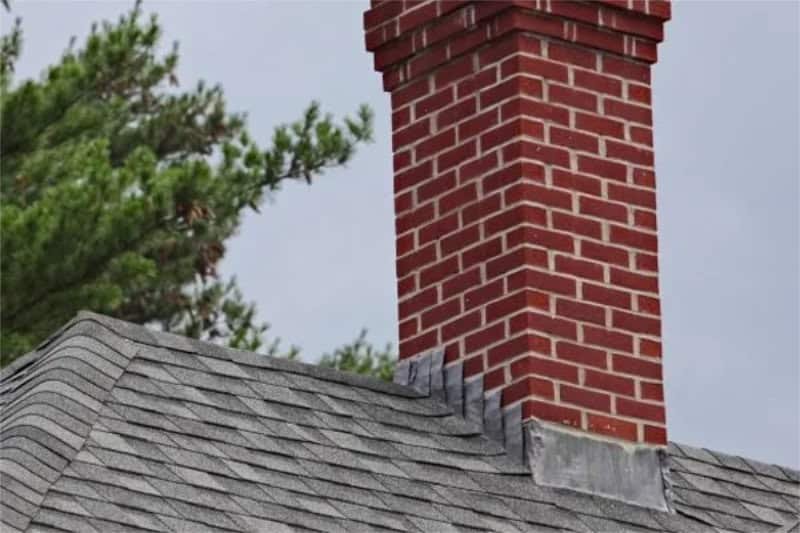
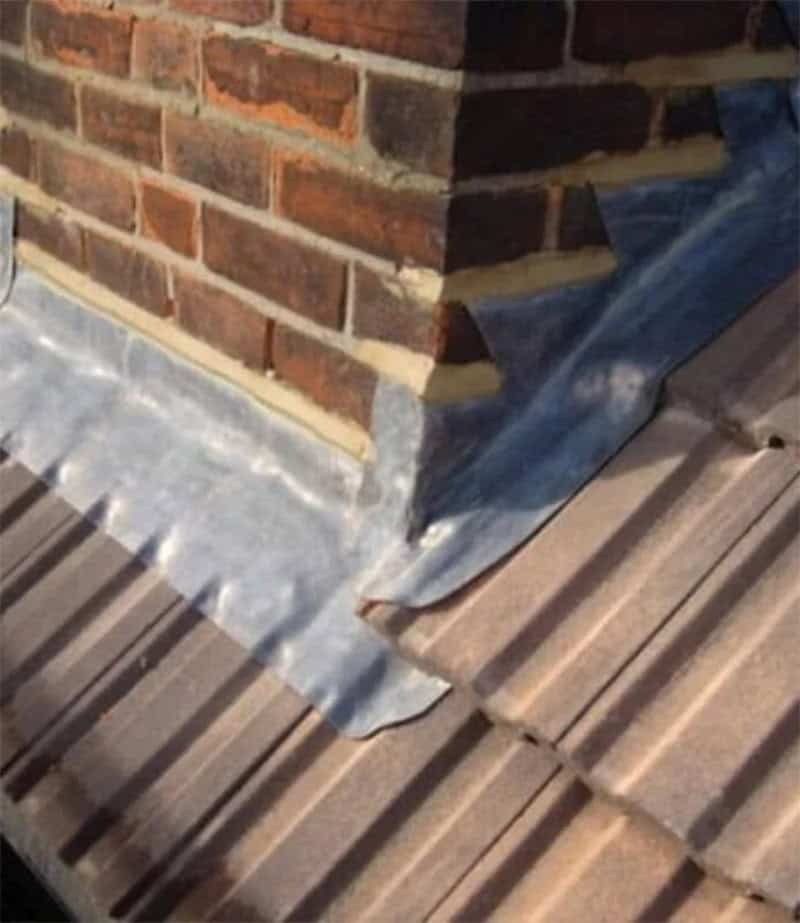
Lead flashing seals the critical junction between the chimney stack and the surrounding roof covering — the step flashings up the sides of the stack, the back gutter behind the stack, and the front apron at the base. This is one of the most vulnerable junctions on any roof. The lead expands and contracts significantly with temperature and, over years, lifts, pulls away from the mortar chase, or develops cracks and splits. When it fails, water runs directly down the back of the chimney breast inside the roof — often appearing as damp on an upper-floor wall or ceiling and being mistakenly attributed to other causes. We re-dress and repoint existing lead where it retains sufficient depth and condition, or cut and fit new Code 4 or Code 5 lead where the existing material has reached end of life. All new flashings are properly chased into the brickwork, wedged, sealed and pointed to resist movement and weathering.
Chimney pots can crack, tip and fall — either from physical impact, from frost damage to the clay body, or simply from the flaunching beneath them failing and allowing movement. A missing or severely cracked pot exposes the top of the flue liner or the mortar core of the stack to direct water ingress. We replace cracked or missing pots with matching clay or terracotta pots appropriate to the property type, or fit protective chimney cowls or capping plates on redundant flues that are no longer in active use. A capped or cowled flue on an unused chimney prevents rainwater, birds and debris entering the flue while maintaining ventilation to the chimney void and preserving the external appearance of the stack. For stacks on Listed or Conservation Area properties, we match pot style and profile to the original wherever possible and advise on any planning requirements before proceeding.
Beyond mortar joint erosion, chimneys can suffer physical damage to the brickwork itself — freeze-thaw spalling, impact damage, cracked or loose bricks, or sections of stack that have shifted or started to lean. Where damage is localised, individual bricks can be cut out and replaced, and the affected section rebuilt to match the original coursing and bond. Where deterioration has spread across a significant portion of the stack but the base is structurally sound, a partial rebuild — taking the stack down to the sound level and rebuilding from there — is often the most cost-effective approach. We always photograph the stack before any dismantling and rebuild to match the original mortar joint profile, brick bond, and stack dimensions.
Where a chimney stack is no longer in use and has deteriorated to the point where repair is no longer economically viable — or where a homeowner simply wishes to remove it — we carry out chimney stack removals to roof level and make the roof good following the demolition. We take the stack down in controlled sections, shore the surrounding roof tiles as needed, cut and seal the remaining flue opening at the top of the ceiling void, and reinstall tiles, battens, felt and flashing over the resulting opening to leave a fully weathertight, clean finish. We always advise on any planning considerations for stack removal, particularly in Conservation Areas or on Listed Buildings where consent may be required before proceeding.
Following repointing and structural repairs, we offer chimney waterproofing treatment using Stormguard and similar silane/siloxane-based water repellent systems. These clear, breathable treatments penetrate the brick and mortar surface, reducing water absorption without trapping moisture inside the stack or altering the appearance of the brickwork. They are particularly effective on porous Victorian stock brick — commonly found across Cambridge's older housing — which can absorb significant volumes of rainwater through the face of the stack even when the joints are in good condition. Waterproofing treatment is recommended as a follow-on to repointing on porous stacks and can significantly extend the service life of the completed repair.
The flue liner inside a chimney stack is the structural lining of the flue channel — either original terracotta clay liner sections in older properties, or a more recently installed flexible steel liner in properties where a wood-burning stove or gas appliance has been fitted. A failed or cracked liner allows flue gases and combustion products to escape into the surrounding brickwork, and allows water to penetrate the stack core from within. We carry out visual inspections of accessible liner sections and can advise on CCTV flue surveys where the liner condition cannot be determined visually. Where liner sections have cracked or displaced, we discuss repair or replacement options and can coordinate with HETAS-registered installers where a new liner installation forms part of a stove or appliance fit. We do not carry out HETAS-regulated gas or combustion work directly, but we can carry out the structural chimney masonry and external repair elements alongside a HETAS contractor.
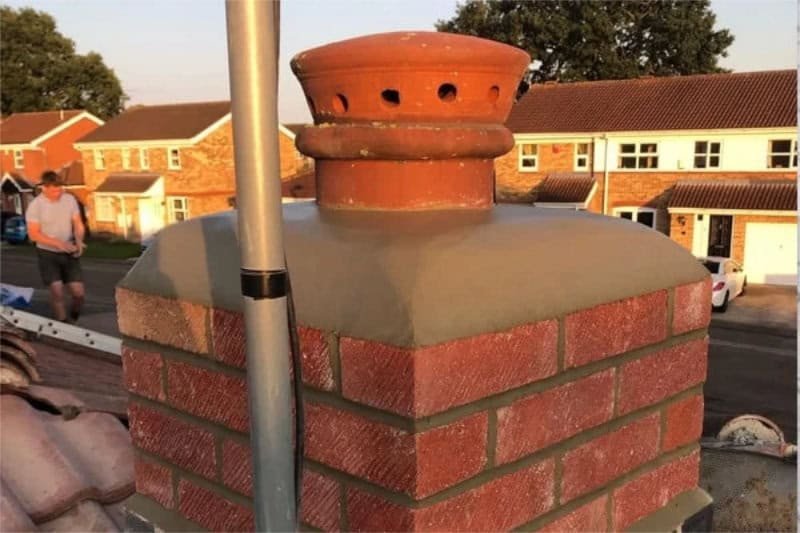
Chimney repointing is the process of removing deteriorated mortar from the joints between chimney bricks and replacing it with fresh mortar. It is the most commonly required chimney maintenance task and, when carried out at the right stage, prevents the far more serious and expensive consequences of water penetrating a stack with failed joints — internal damp, frost-shattered bricks, structural cracking and, ultimately, stack instability. Repointing is also the most frequently botched chimney repair, because the mortar specification is as important as the workmanship — and many Cambridge homeowners have had repointing carried out with the wrong mortar mix, causing bricks to spall and crack within a few years.
On most Cambridge properties built before 1920 — which includes the vast majority of the city’s Victorian terraces, Edwardian semis and inter-war housing — the original brickwork was built using soft lime mortar. This mortar is weaker and more flexible than the brick itself by design: it acts as the sacrificial element, absorbing movement and weathering while the bricks remain intact. Repointing this brickwork with modern Portland cement-based mortar is a significant and common mistake. Portland cement is far stronger and more rigid than the original lime mortar and far stronger than the soft bricks themselves. It traps moisture in the joint rather than allowing it to evaporate, causes cracks to run through the brick rather than the joint, and results in spalling, frost damage and premature failure of the very brickwork it was meant to protect. We repoint pre-1920 Cambridgeshire properties using Natural Hydraulic Lime (NHL) mortar — typically NHL 2 or NHL 3.5 depending on exposure — matched in colour and profile to the original. This is the correct specification for period chimney repointing and the one that results in a repair that integrates with and protects the original fabric rather than damaging it.
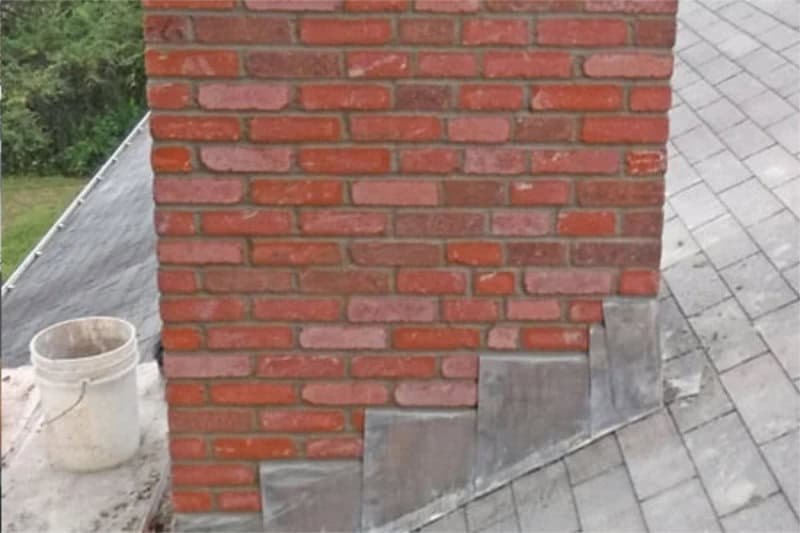
Chimney problems are rarely immediately obvious from inside the house — by the time damp appears on a wall or ceiling, the failure has usually been developing for months or years. Periodic ground-level inspections of your chimney, particularly after winter or a storm, can catch problems at a repairable stage before they become structural. These are the warning signs to look for.
Spotted any of these signs? Call 01223 859867 (Cambridge) or 01480 877624 (St Neots) for a free on-site inspection. We photograph every area of the stack and give you a plain-English explanation of what we find before you commit to any work.
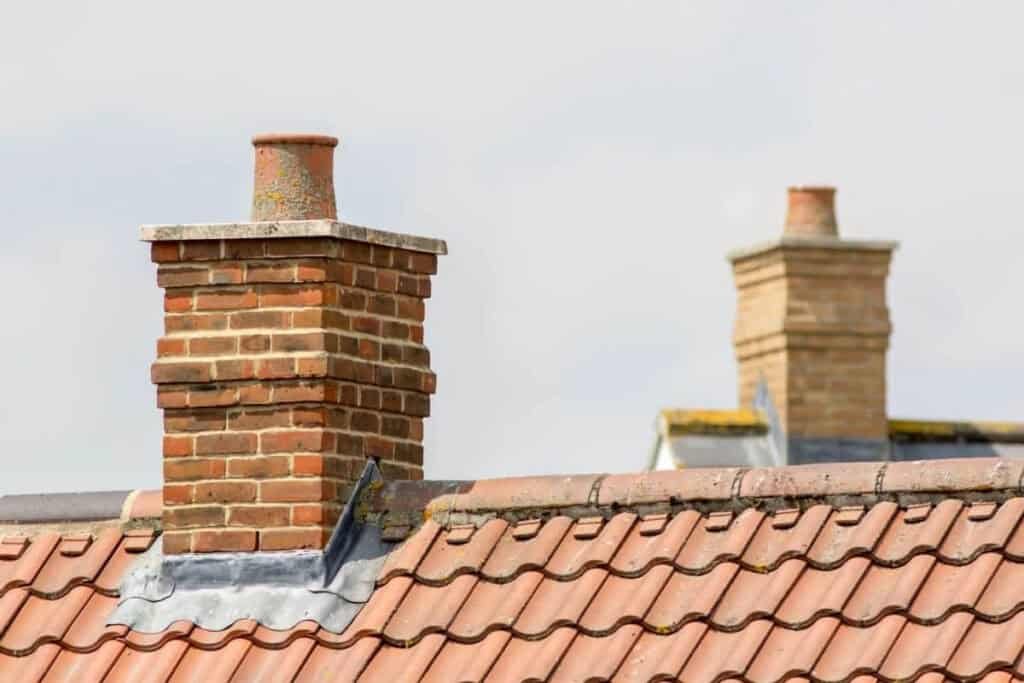
Cambridge has an unusually high density of Listed Buildings and an extensive network of Conservation Areas — covering significant parts of the city centre, Newnham, Chesterton, Cherry Hinton, several of the southern villages, and many market towns across Huntingdonshire. In these areas, chimney repairs are subject to additional considerations that do not apply to standard domestic properties: material specifications may be specified or restricted, changes to chimney appearance (including pot styles, stack height or removal) may require Listed Building Consent or planning permission, and the need to preserve the original building fabric is both a legal obligation and a practical one.
We are experienced in chimney repair work on Listed Buildings and properties within Conservation Areas across Cambridgeshire. Our approach to listed and conservation work is methodical: we use lime mortar of the appropriate specification for the age and construction of the building, we source matching brick or terracotta pot materials where replacement is needed, and we take a conservative approach to what we remove versus what we retain and restore. We advise on any consent requirements we are aware of during the quotation process and we do not carry out any work that may require Listed Building Consent without first flagging this and confirming the position with you.
If your property is Listed or within a Conservation Area and you are unsure what permissions may be needed before proceeding with chimney work, Cambridge City Council’s planning department, South Cambridgeshire District Council and Historic England’s online resources can provide initial guidance. We recommend confirming this position before any works are agreed where there is doubt. We are happy to assist in scoping what work is proposed so that you can make the appropriate enquiries before committing.
Chimney repairs happen at height, out of sight, in conditions that make it difficult for a homeowner to verify what work was actually done. That reality makes the integrity of the contractor you choose more important than almost any other trade. Here is why Cambridgeshire homeowners trust Acorn with their chimney repairs.
We photograph every accessible area of the stack during the inspection and photograph the completed work when we are done. You receive copies of both — giving you evidence of the chimney's condition before any work, what was found, what was repaired, and the standard of the finished job. For chimney work specifically, where everything happens out of your direct sight at height, this matters enormously.
We come to you, inspect the chimney, show you the photographs and explain what we find honestly. If the chimney needs repointing, we will say so and show you why. If it does not, we will tell you that too. We do not diagnose problems that are not there to generate work, and we do not underquote to win the job and then revise the cost on-site.
We use Natural Hydraulic Lime (NHL) mortar on pre-1920 properties and all Listed Buildings — not Portland cement, which damages soft Victorian brickwork. Getting the mortar specification right is not a minor detail. It is the difference between a repoint that lasts 20 years and one that causes brick spalling within five. This is a standard part of our assessment on every Cambridge period property job.
Every roofer on your job is a directly employed member of the Acorn team, backed by full public liability insurance. We never subcontract chimney work to third parties. You have consistent quality, clear accountability and a team that stands behind what it repairs.
Every chimney repair is backed by a written workmanship guarantee confirmed in your quotation. If the repair fails within the guarantee period, we return and put it right at no cost. No argument, no conditions, no charge.
Chimney work is height work and must be approached with proper equipment and training. Our team is experienced in working safely at all roof heights and we use correctly specified scaffold for every chimney job — not ladders propped against the stack. Safe access is not negotiable.
Verified five-star Google reviews from homeowners in Cambridge, St Neots, Huntingdon and the surrounding villages. Read what our customers say about the quality of our roofing work, our communication and how we leave their properties.
Posted on Google
 Ewen Kellar
Trustindex verifies that the original source of the review is Google.
Andy and his team were super helpful. Despite having a busy schedule he managed to fit our chimney repointing job in at really short notice.Posted on Google Tracey CobbAfter having some cowboys fix mums roof last year in St Neots Joe and his team came to the rescue and replaced the roof. Kurt and Ashley are a credit to this company. So polite and respectful. The job was completed quickly and efficiently and I would strongly recommended using them. You get a 10yr guarantee which made me feel even more assured that I had gone with the right company this time. Thank youPosted on Google
 Tolga HuseyinAfter some strong winds one of our tiles had slipped off so I contacted Acorn who came out quickly to assess the damage and provided a competitive quote for the remedial work. They then came back on the Monday and completed the work. Highly recommended.Posted on Google
 Ricky BettsI would highly recommend this company to anyone, they are the professionals and gave me good advice through all the stages of the work they carried out thank you Jo and the boysPosted on Google
 Tony EdgeThey turned up when they said they would. Did not disappear on other jobs whilst working on my roof. Cleaned up each day. 10 year guarantee on the whole roof gives piece of mind that there will be no more leakesPosted on Google
 Sue MatthewsReally prompt service. Leaking roof, prompt and reliable service. Contacted, quoted and repaired within 3 days, would have been 2 days but the weather was not good. Standard of work very good. Would definitely use again.Posted on Google
 John TantonFast response to my search. Small roof stripped and re-slated in a day, thanks to the herculean efforts of James the roofer, In the very hot weather. Roof now watertight and a delight to the eyes. Many thanks. John Tanton - Snailwell.Posted on Google
 Anzhela BosevaI was happy with the quick response. Nice job , clean house and the roof leak finally has been fixed. Thank you Joe. I definitely recommend them.Posted on Google
 Sabrina BusiaVery reliable and committed company. Nice service, work went smooth and result was brilliant. Highly recommend.Posted on Google
 Connor StephensGot my cracked tiles replaced and stopped the leak that was coming through. Great service and worth the money, highly recommended!
Whether you have noticed a specific problem — damp patches, a leaning pot, visible joint erosion — or simply want an honest professional assessment of your chimney’s condition before winter, we are here to help. Our inspection is free, fully photographed and comes with no obligation. Call our Cambridge office on 01223 859867, our St Neots office on 01480 877624, or fill in the quick enquiry form. We respond to all enquiries the same working day.
We carry out chimney repairs from our offices in Cambridge and St Neots, covering the whole of Cambridgeshire and Huntingdonshire. Cambridge generates a consistently high volume of our chimney work — the city’s dense stock of Victorian terraces, Edwardian semis and inter-war properties, concentrated in areas like Newnham, Petersfield, Romsey, Arbury, Cherry Hinton and the southern villages, means that chimney repointing and lead flashing repair are among the most regularly requested services we carry out. Our St Neots team covers Huntingdon, St Ives, Godmanchester, Ramsey, Buckden and the wider Huntingdonshire district, as well as reaching to Peterborough, Ely, March, Wisbech and the fen towns. If your property is a Listed Building or falls within a Conservation Area, we take particular care to use appropriate materials and observe any relevant planning and consent requirements — see the section above for more detail.
The clearest visual sign from ground level is mortar that has receded behind the brick face — look for visible shadowing or gaps in the joint lines running between bricks. On a sound chimney, the mortar should be flush with or only very slightly recessed from the brick face. If you can see distinct horizontal and vertical dark lines indicating deep joint recession, or if sections of mortar have dropped out entirely, repointing is needed. White staining (efflorescence) on the brickwork face is another reliable indicator. At close range — if you can safely access the stack or have a roofer inspect it — soft mortar that crumbles under finger pressure, sounds hollow when tapped, or shows moss and vegetation growth in joints all confirm that repointing is overdue. We carry out free chimney inspections with photographs across Cambridge and Cambridgeshire — call 01223 859867 or 01480 877624 to arrange one.
The duration depends on the scope and the access required. A straightforward flashing repair or a single-face repoint on a standard-height chimney can often be completed within a single day once scaffold is in position. A full four-face repoint with flaunching renewal and pot replacement on a tall Cambridge terrace chimney typically takes two to three days. A partial rebuild adds time depending on the number of courses to be dismantled and relaid. Full stack removals — including making the roof good — typically take one to two days for a standard domestic chimney. We will give you a realistic and specific timescale in the written quotation before any work is agreed.
Yes — lead flashing repair and replacement is one of our most frequently requested chimney services. The flashing around a chimney stack — step flashings up the sides, back gutter behind the stack, front apron at the base — is the primary weather barrier at the chimney-to-roof junction. When it lifts, cracks or pulls from the chase, water runs directly into the roof structure and down the chimney breast. We re-dress existing lead where it has sufficient depth and condition remaining, or cut and fit new Code 4 or Code 5 lead where replacement is the appropriate option. All new flashings are chased, wedged, sealed and pointed correctly.
Yes. We carry out full chimney stack removals to roof level where a chimney is no longer in active use and where the structure has deteriorated to the point where repair is not economic, or where the homeowner simply wishes to remove it. We dismantle the stack in controlled sections from the top down, shore the surrounding tiles during the process to prevent any disturbance to the roof covering, and close the resulting opening with new timbers, felt, battens and tiles to leave a weathertight, finished result matching the surrounding roof. We will advise on any planning requirements before proceeding — stack removal may require planning consent in Conservation Areas or on Listed Buildings.
Yes. We are experienced in chimney repair work on Listed Buildings across Cambridgeshire and take particular care with material specification and method on these properties. For Listed Buildings, we use Natural Hydraulic Lime (NHL) mortar for repointing work — the correct specification for buildings constructed with soft lime mortar, which is the standard for the vast majority of Cambridgeshire's pre-1920 stock. We source matching brick and terracotta materials where replacement is needed, and we take a conservative approach to what we remove and restore. Any works to a Listed Building that go beyond like-for-like repair may require Listed Building Consent from the local authority — we will flag any relevant considerations during the quotation process and will not proceed with work that may require consent without first confirming this with you.
Call our Cambridge office on 01223 859867, our St Neots office on 01480 877624. You can also fill in the enquiry form on this page — we respond to all web enquiries the same working day. We will arrange a convenient time to visit your property, carry out a free on-site inspection and provide a written, itemised, fixed-price quotation with photographs of the stack condition. No obligation to proceed.
Chimney repair costs vary considerably depending on the scope of the work, the height of the stack, the access required, and the specific repairs needed. A straightforward lead flashing re-dress or flaunching renewal on a standard-height chimney typically runs to a few hundred pounds; a full four-face repoint with scaffold on a tall Cambridge terrace chimney will be more; a partial or full stack rebuild will be higher still. The only accurate cost is one based on a proper on-site inspection — which we carry out free of charge, with photographs included. Call 01223 859867 to arrange a Cambridge inspection or 01480 877624 for Huntingdonshire.
For any Cambridge property built before approximately 1920 — which covers virtually all Victorian and Edwardian terraces, semis and detached houses — the correct mortar for chimney repointing is Natural Hydraulic Lime (NHL) mortar, either NHL 2 or NHL 3.5 depending on the exposure level. Portland cement-based mortar must not be used on these properties. The original brickwork was built with soft lime mortar and the bricks are soft relative to modern engineering brick. Portland cement is far stronger and more rigid than both the original mortar and the bricks — it traps moisture, forces cracks through the brick face and causes spalling. NHL mortar, by contrast, is flexible, vapour-permeable and sacrificial in the correct way. We use NHL mortar as standard on all pre-1920 Cambridge chimney repointing work.
Like-for-like chimney repairs — repointing in matching mortar, replacing a pot with a matching pot, re-dressing existing lead — do not generally require planning permission, even within a Conservation Area or on a Listed Building. However, works that change the appearance of the chimney — altering the stack height, changing the pot style, removing a chimney stack — may require planning consent or, for Listed Buildings, Listed Building Consent. In a Conservation Area, permitted development rights are also more restricted. We advise on any relevant planning considerations during the quotation process and will not proceed with any works that may require consent without first flagging this clearly and confirming the position with you. Cambridge City Council's planning department can confirm whether your specific property falls within a Conservation Area.
This depends on three factors: whether the chimney is in active use, the extent and cost of the repairs needed, and the character of the property. If the chimney is serving an active fireplace, wood-burning stove or solid-fuel appliance, it must be maintained — removal is not an option while the flue is in use. For redundant chimneys — no longer connected to a fireplace or stove — the decision is largely economic and aesthetic. A chimney that needs repointing and a pot replacement is almost always worth repairing. A chimney that needs a full rebuild, new lead, new pot and flaunching may cost more to repair than the long-term benefit justifies, particularly on a property where the chimney is redundant and the expenditure will not be recovered in property value. We will give you an honest assessment of both options — with costs for each — during the inspection, so you can make an informed decision without pressure.